Protect coastal habitats, Minimize disturbance to shorebirds
White-rumped Sandpiper
(Calidris fuscicollis)
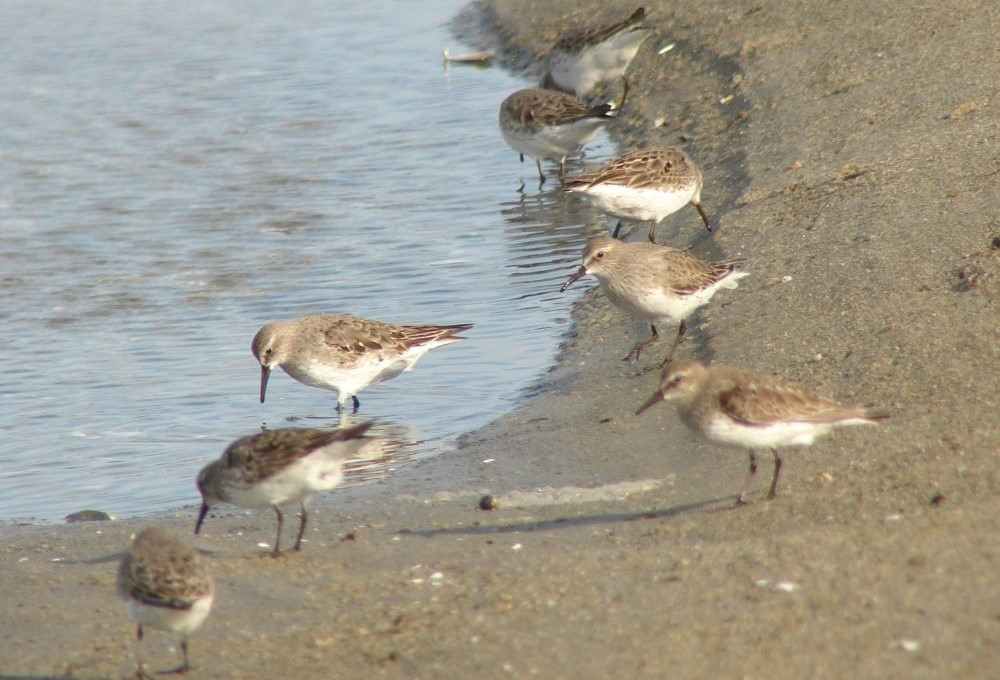
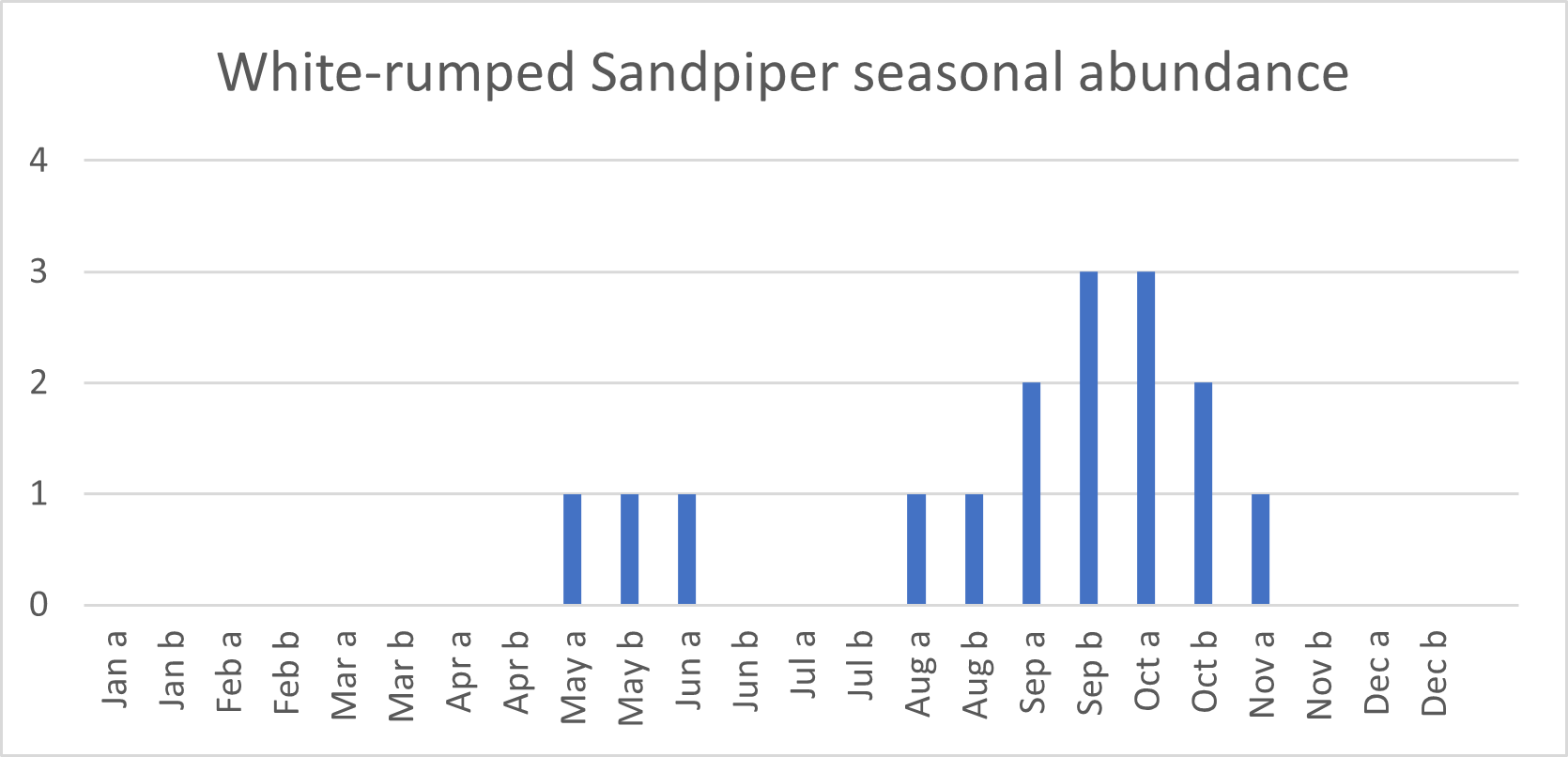
As its name implies, this species is most readily distinguished from other small sandpipers by its completely white rump, a feature best observed in flight. Most similar species have white edges to the tail but a dark area between them. When not in flight, another identification feature is the longer wings of the White-rumped Sandpiper, which extend well beyond the tip of tail than those of the other small “peeps” such as Least and Semipalmated Sandpipers. Longer wings are typically a clue that a bird undertakes a longer migration, since they are more efficient, and the White-rumped Sandpiper follows this adage. It undertakes a fall journey of up to 15,000 miles from the Canadian high arctic to the coast of Argentina, part of which is a 4,000 non-stop jump for New England to South America. This is when we’re most like to see them in New Hampshire, since their spring route takes them north through the Great Plains.
Relative abundance based on eBird data. Numbers indicate likelihood of finding this species in suitable habitat at a given time of year, not actual numbers encountered.
White-rumped Sandpiper Range Map
= Breeding
= Winter
= Migration
= Year Round
Information for the species profiles on this website was compiled from a combination of the sources listed below.
The Birds of New Hampshire. By Allan R. Keith and Robert B. Fox. 2013. Memoirs of the Nuttall Ornithological club No. 19.
Atlas of the Breeding Birds of New Hampshire. Carol R. Foss, ed. 1994. Arcadia Publishing Company and Audubon Society of New Hampshire
Birds of the World. Various authors and dates. Cornell Laboratory of Ornithology.