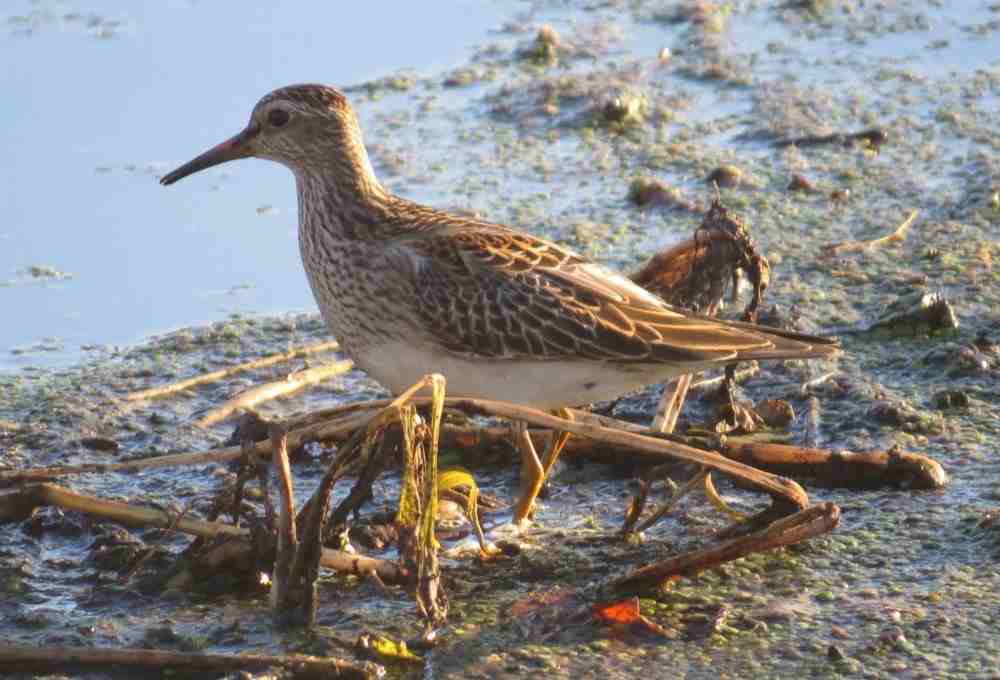
While most of our sandpipers occur in their largest numbers along the NH coast, the Pectoral Sandpiper is something of an exception. While it can be found in mixed flocks on beaches and salt marsh roosts, it is much more common (but never abundant) inland in freshwater habitats like flooded fields, farm ponds, and sewage lagoons. Most of its breeding range is west of Hudson Bay in arctic Canada and Alaska, meaning that the bulk of spring and fall migration occur through the central portion of North America rather than the east coast. Unlike most of the shorebirds that visit New Hampshire, Pectoral Sandpipers have an unusual mating system. Males are 50% larger by weight than females and often have multiple mates – either at the same time or sequentially. Their complicated mating display involves an inflatable throat sack, hoot-like vocalizations, and a much posturing on the ground in the manner of a prairie-chicken.
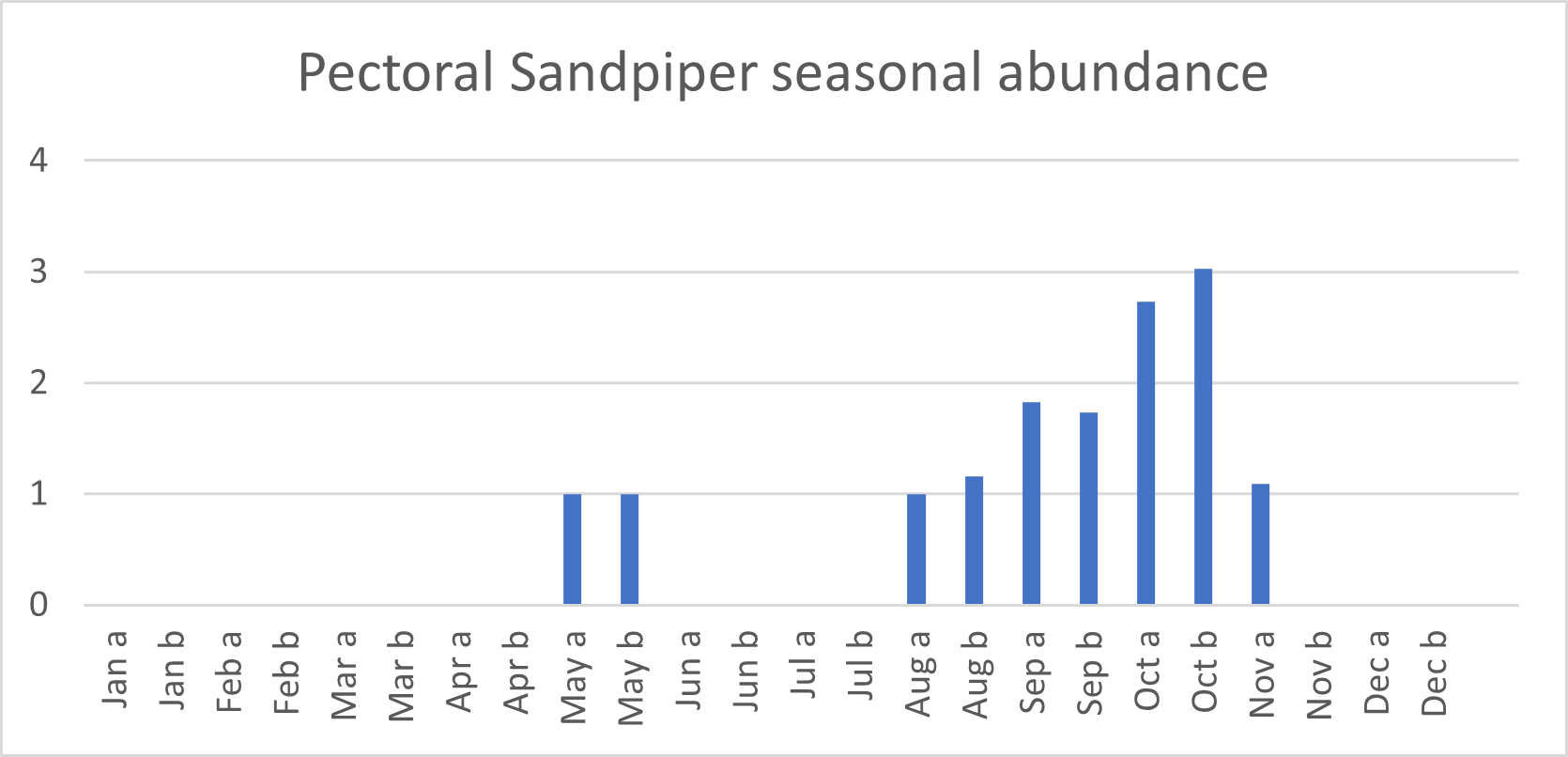
Relative abundance based on eBird data. Numbers indicate likelihood of finding this species in suitable habitat at a given time of year, not actual numbers encountered.
Pectoral Sandpiper Range Map
= Breeding
= Winter
= Migration
= Year Round
Information for the species profiles on this website was compiled from a combination of the sources listed below.
The Birds of New Hampshire. By Allan R. Keith and Robert B. Fox. 2013. Memoirs of the Nuttall Ornithological club No. 19.
Atlas of the Breeding Birds of New Hampshire. Carol R. Foss, ed. 1994. Arcadia Publishing Company and Audubon Society of New Hampshire
Birds of the World. Various authors and dates. Cornell Laboratory of Ornithology.