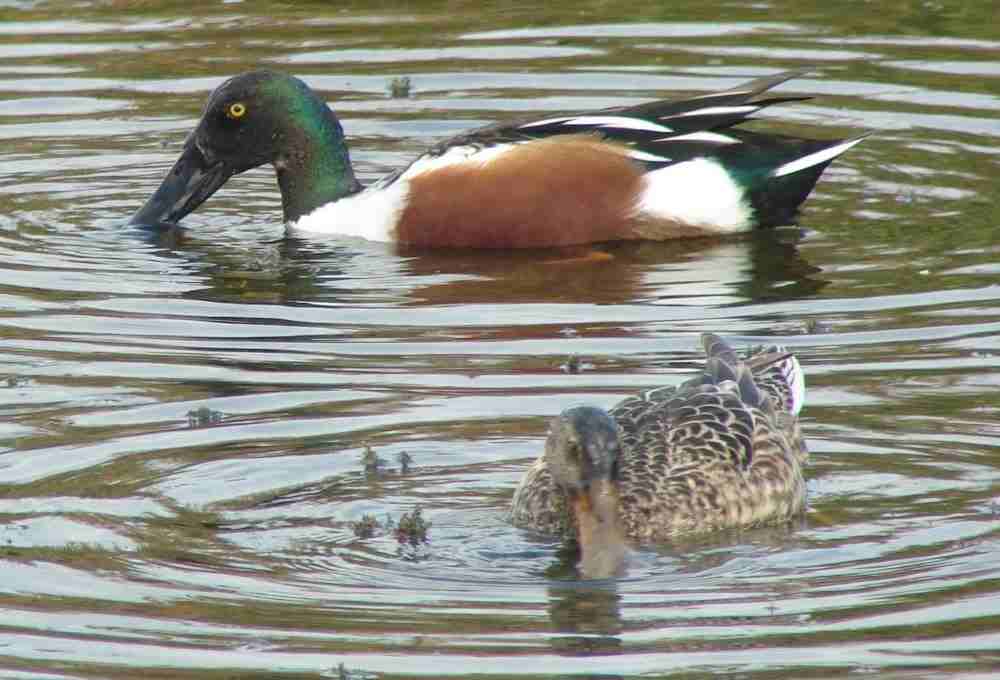
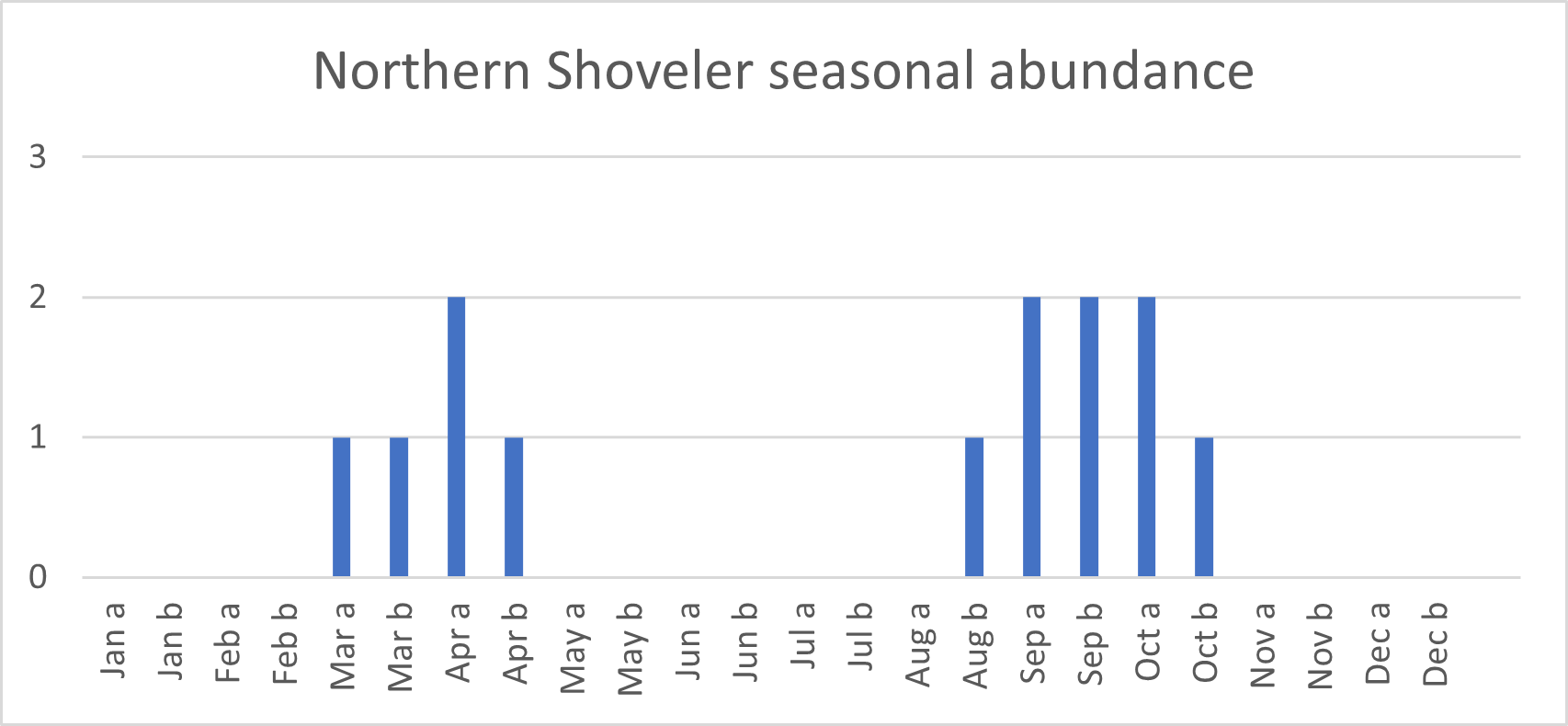
The Northern Shoveler is one of the rarer ducks to occur regularly in New Hampshire, with a handful of records each year in the major river valleys or along the coast. Most are found in early spring, with a second pulse in the fall. Occasionally a rare individual will overwinter where ponds remain open. The shoveler gets its name from its oversized bill, which like those of all dabbling ducks has rows of narrow ridges called lamellae along the inside edges of the upper bill. These ridges function as strainers: the bird takes in water through its partially open bill and forces it out with its tongue when the bill is closed. Anything left behind can then be swallowed without taking in extra water – a system very similar to that used by baleen whales! Shovelers take this to the extreme and will keep their bills underwater continuously for long periods – straining the entire time. Groups of birds will sometimes gather and spin in circles to churn up the water, bringing food items closer to the surface.
Relative abundance based on eBird data. Numbers indicate likelihood of finding this species in suitable habitat at a given time of year, not actual numbers encountered.
Northern Shoveler Range Map
= Breeding
= Winter
= Migration
= Year Round
Information for the species profiles on this website was compiled from a combination of the sources listed below.
The Birds of New Hampshire. By Allan R. Keith and Robert B. Fox. 2013. Memoirs of the Nuttall Ornithological club No. 19.
Atlas of the Breeding Birds of New Hampshire. Carol R. Foss, ed. 1994. Arcadia Publishing Company and Audubon Society of New Hampshire
Birds of the World. Various authors and dates. Cornell Laboratory of Ornithology.