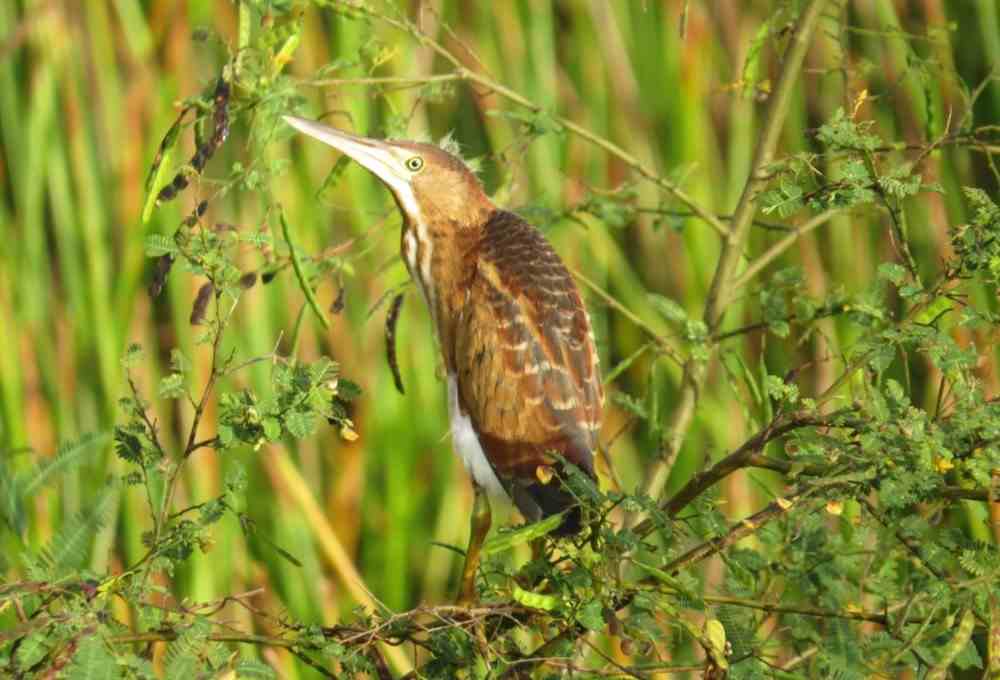
This is the smallest heron in North America and given its size and secretive nature is more often seen than heard. If you’re visiting one of the handful of sites where it nests in New Hampshire, listen for a cuckoo-like staccato “ku-ku-ku” coming from dense marsh vegetation. If you have a boat or patience, you may be rewarded with a glimpse of this tiny cinnamon-colored bird climbing or flying among the reeds. Preferred habitats are usually impenetrable stands of cattails or invasive Phragmites, usually with patches of open water interspersed or along the edge.
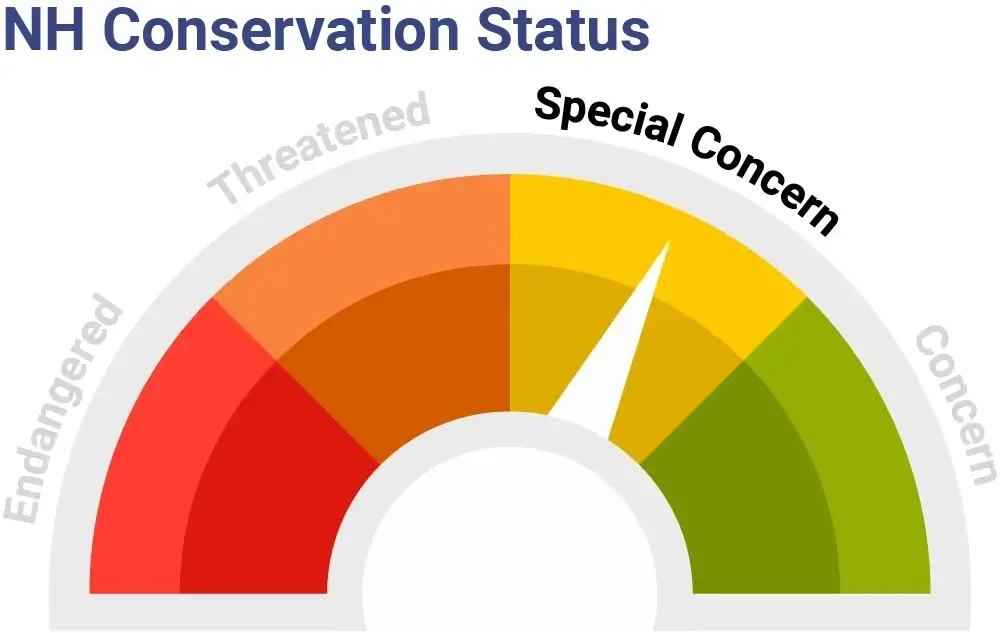
During the first Breeding Bird Atlas in the early 1980s, there were no confirmed nesting records of Least Bittern in the state, only two tantalizing records in Sutton and Hampton. In more recent years it has become reliable at sites scattered across southeastern New Hampshire, as well as in the Upper Valley in Lebanon. Some of these sites have been occupied several years in a row, while others seem more ephemeral, and given the number of cattail marshes scattered across the state it is likely that there are more Least Bitterns here than we think.
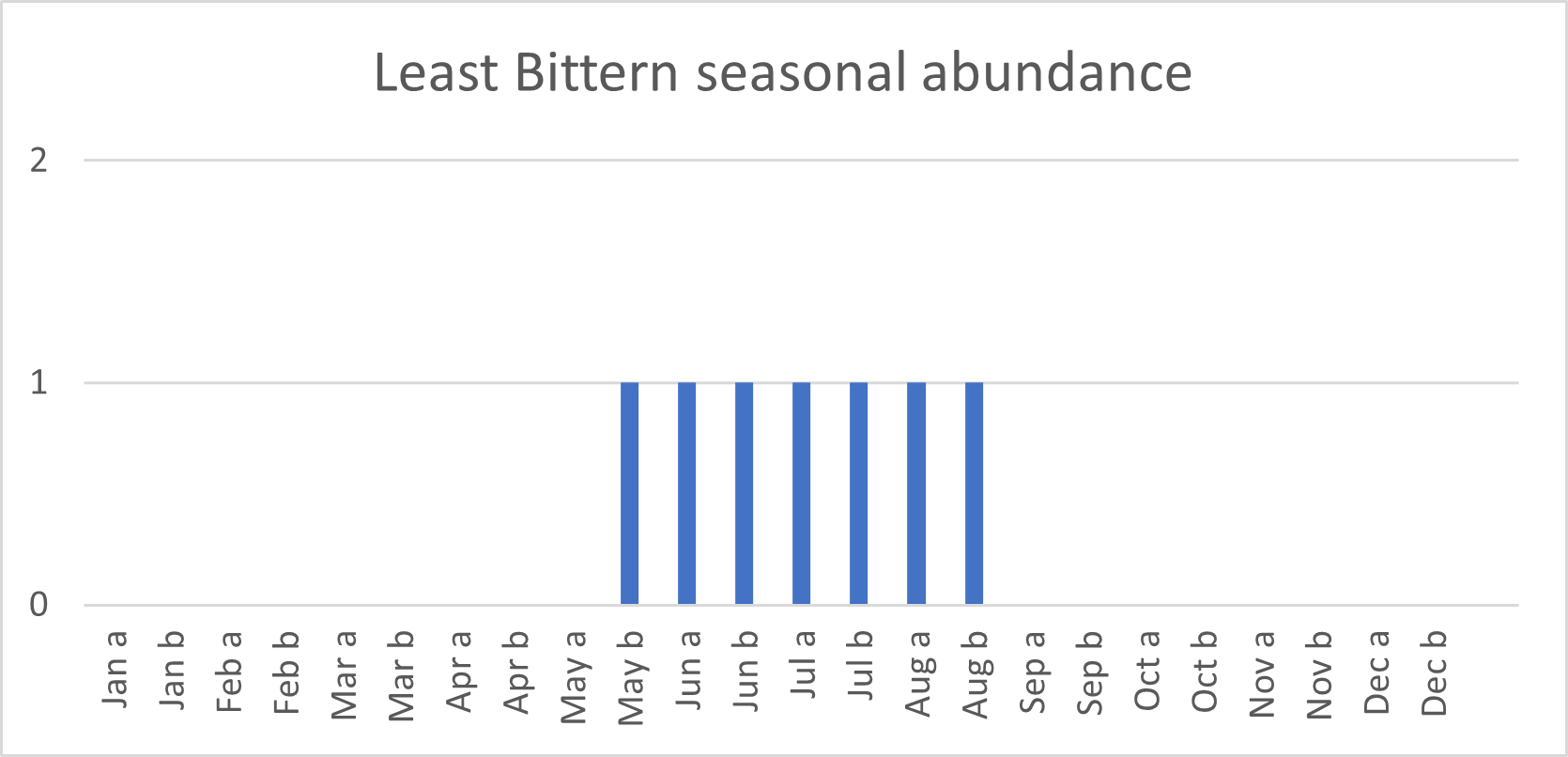
Relative abundance based on eBird data. Numbers indicate likelihood of finding this species in suitable habitat at a given time of year, not actual numbers encountered.
Least Bittern Range Map
= Breeding
= Winter
= Migration
= Year Round
Information for the species profiles on this website was compiled from a combination of the sources listed below.
The Birds of New Hampshire. By Allan R. Keith and Robert B. Fox. 2013. Memoirs of the Nuttall Ornithological club No. 19.
Atlas of the Breeding Birds of New Hampshire. Carol R. Foss, ed. 1994. Arcadia Publishing Company and Audubon Society of New Hampshire
Birds of the World. Various authors and dates. Cornell Laboratory of Ornithology.