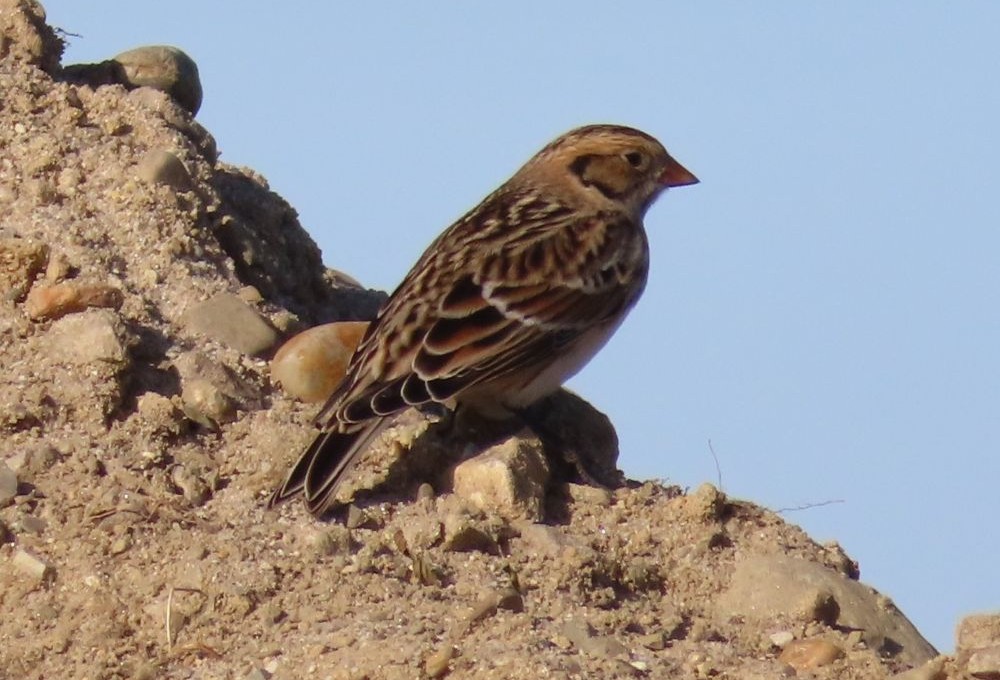
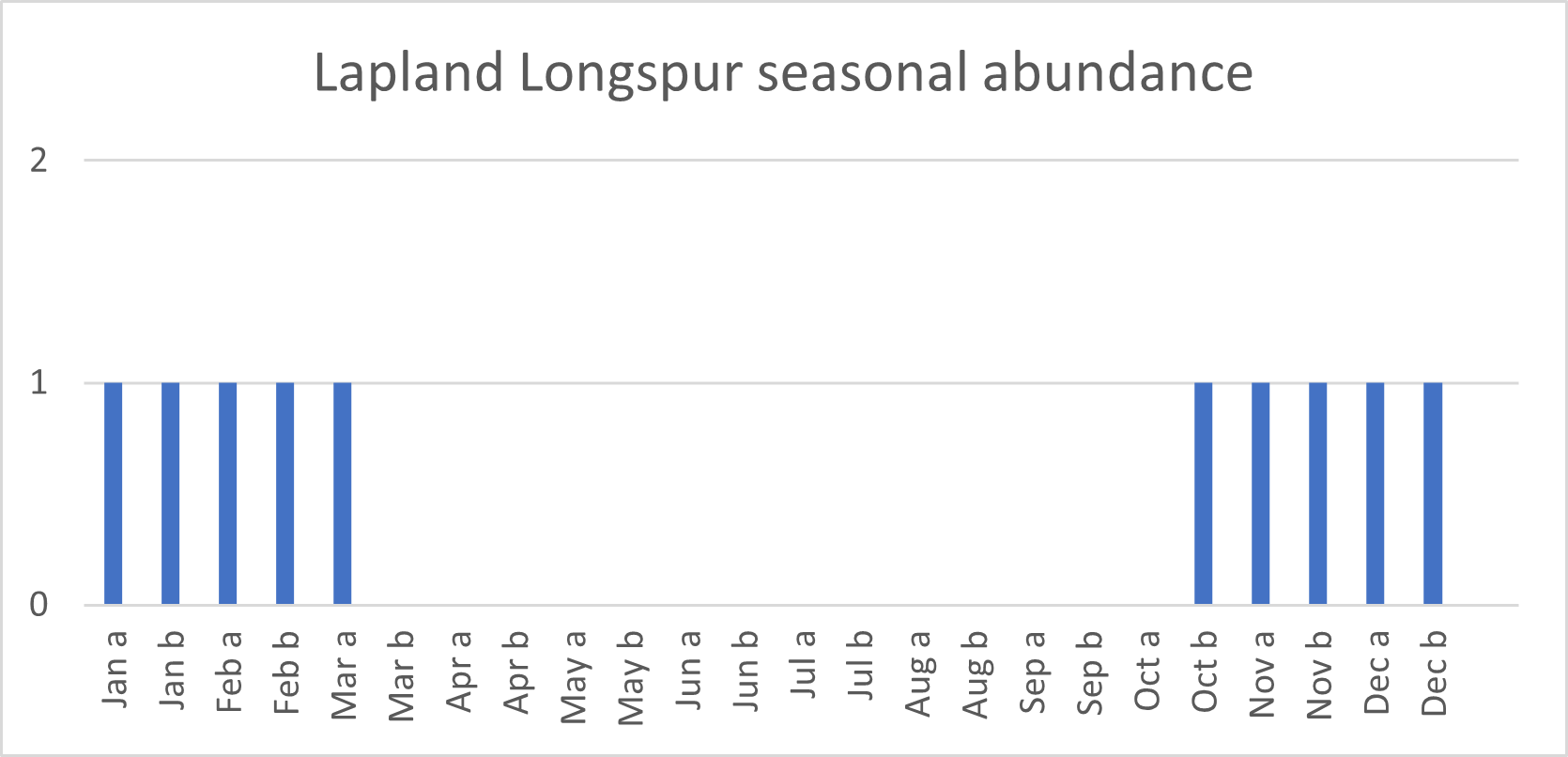
One of the fun challenges of winter birding is to try to find one or more Lapland Longspurs in a large skittish flock of Horned Larks or Snow Buntings (although they tend to associate more with larks for some reason). In non-breeding plumage longspurs are non-descript and sparrow-like, which only adds to the difficulty of picking them out. Like the more common birds with which they occur, longspurs breed far to the north on the arctic tundra and are only in New England during the winter. Look for them in open areas of short grass not covered in snow, including parking lots, cornfields, and sometimes lawns. By March they are ready to head back north to the still-frozen tundra, and if you’re lucky enough to find one in early spring the males will have started molting into their stunning black and chestnut breeding plumage.
Relative abundance based on eBird data. Numbers indicate likelihood of finding this species in suitable habitat at a given time of year, not actual numbers encountered.
Lapland Longspur Range Map
= Breeding
= Winter
= Migration
= Year Round
Information for the species profiles on this website was compiled from a combination of the sources listed below.
The Birds of New Hampshire. By Allan R. Keith and Robert B. Fox. 2013. Memoirs of the Nuttall Ornithological club No. 19.
Atlas of the Breeding Birds of New Hampshire. Carol R. Foss, ed. 1994. Arcadia Publishing Company and Audubon Society of New Hampshire
Birds of the World. Various authors and dates. Cornell Laboratory of Ornithology.