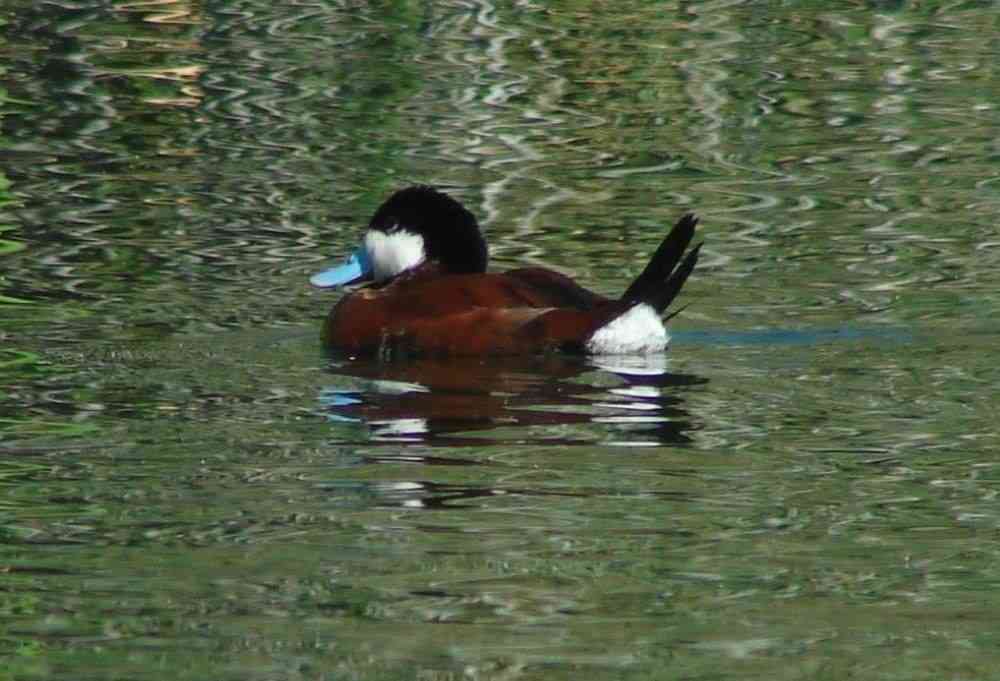
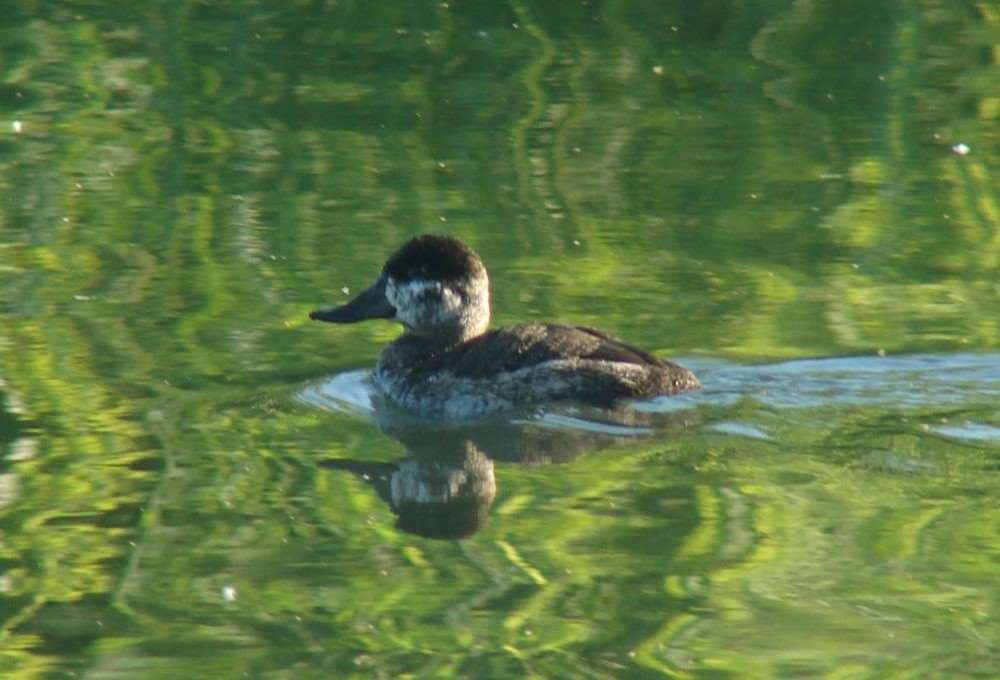
The Ruddy Duck belongs to a group of waterfowl known as “stiff-tails” because of their relatively long and still tails that are often held up at an angle. Males in breeding plumage are quite conspicuously marked, sporting a bright blue bill, white cheek patch, and overall chestnut body feathers. In winter they are a nondescript brown, although they retain their white cheeks. Ruddy Ducks are divers that feed almost entirely on the aquatic larvae of midges. They are regular fall migrants in New Hampshire but not widespread, with the highest numbers historically reported from shallow ponds, including those at wastewater treatment plants, in the southeastern part of the state. This is one of the more widespread ducks in North America. Although the bulk of its population occurs along with other waterfowl in the Great Plains, there are scattered populations across the West and even parts of the East, where breeding is often only temporary. They are even found nesting south into northern Central America and the West Indies. Ruddy Ducks lay the largest eggs relative to their body size of any duck. When she is done laying, a female will weigh only a little more than the combined weight of her clutch.
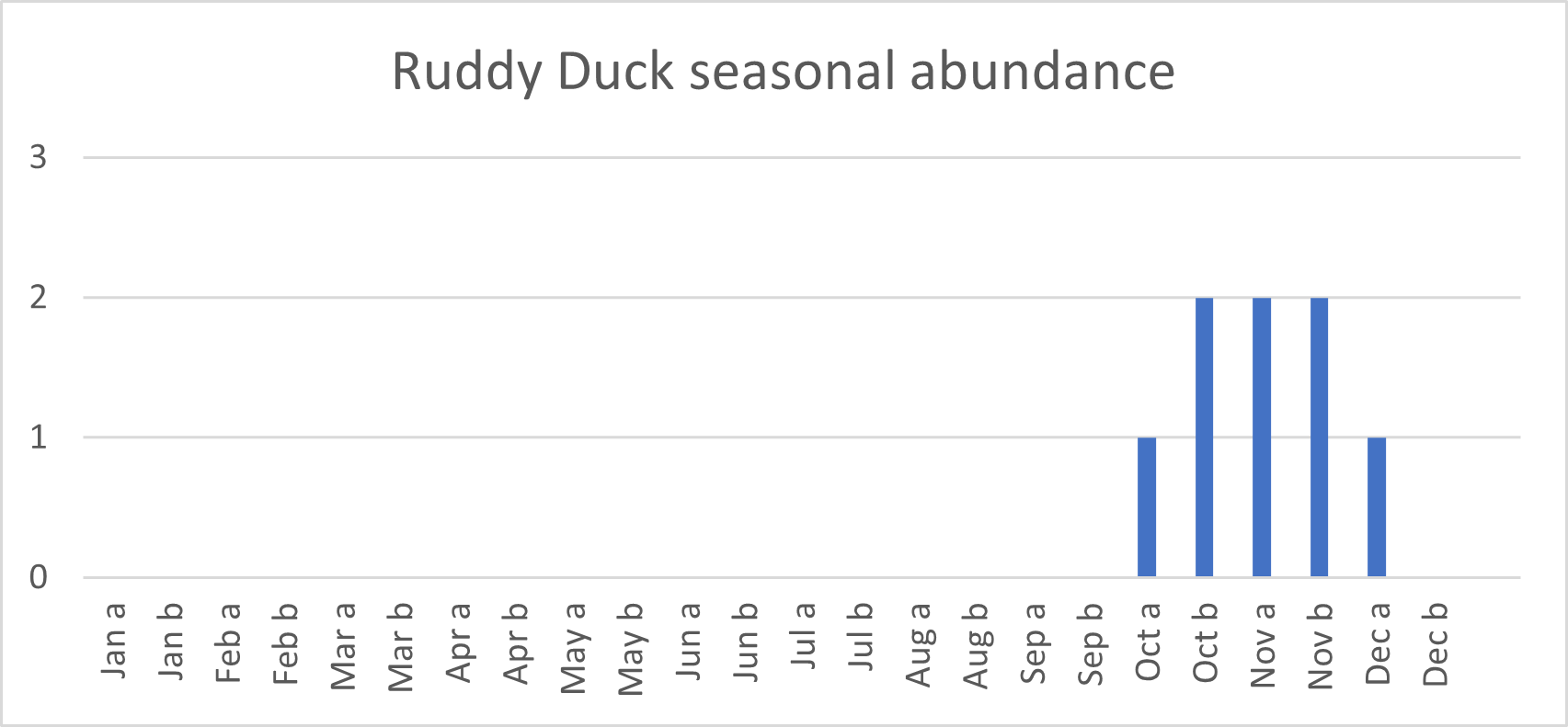
Relative abundance based on eBird data. Numbers indicate likelihood of finding this species in suitable habitat at a given time of year, not actual numbers encountered.
Ruddy Duck Range Map
= Breeding
= Winter
= Migration
= Year Round
Information for the species profiles on this website was compiled from a combination of the sources listed below.
The Birds of New Hampshire. By Allan R. Keith and Robert B. Fox. 2013. Memoirs of the Nuttall Ornithological club No. 19.
Atlas of the Breeding Birds of New Hampshire. Carol R. Foss, ed. 1994. Arcadia Publishing Company and Audubon Society of New Hampshire
Birds of the World. Various authors and dates. Cornell Laboratory of Ornithology.